

I independently & honestly review all of my travel recommendations. If you click on links I provide, I may receive compensation
One thing I love about travel is trying new local drinks. Many times, these are just different sodas I haven’t encountered elsewhere. But in Mexico, there’s a wide array of drinks made from local ingredients that are like nothing you’ve probably had before. Some of these drinks have centuries of history, dating back to the pre-Columbian era. One of these drinks is tejate, a drink that is so highly regarded that it’s referred to as “the drink of the gods.
What is Tejate?
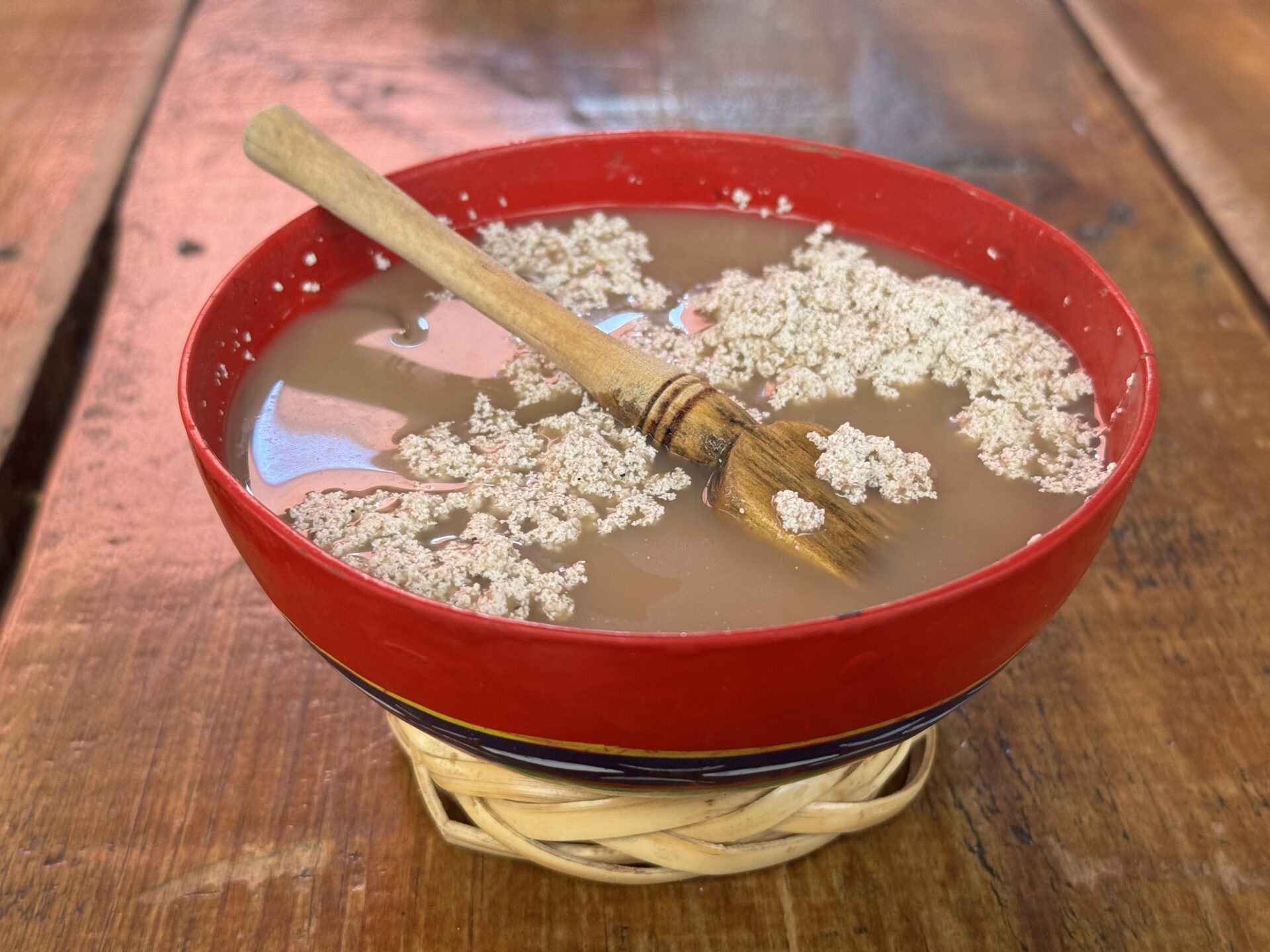
Tejate is a drink made from a paste of toasted maize, fermented cacao beans, pixtle (toasted mamey pits), and flor de cacao (aka rosita de cacao), then mixed with water (and often sugar).
Despite the name flor de cacao, it has nothing to do with cacao. It’s actually a flower from a local tree known as Quararibea funebris. It’s found in Mexico and Central America, but it’s especially common near Oaxaca de Juárez.
The Mesoamerican drink was first made by the Mixtec and Zapotec peoples of Oaxaca hundreds of years before the Spanish invasion. It’s called cu’uhb in Zapotec.
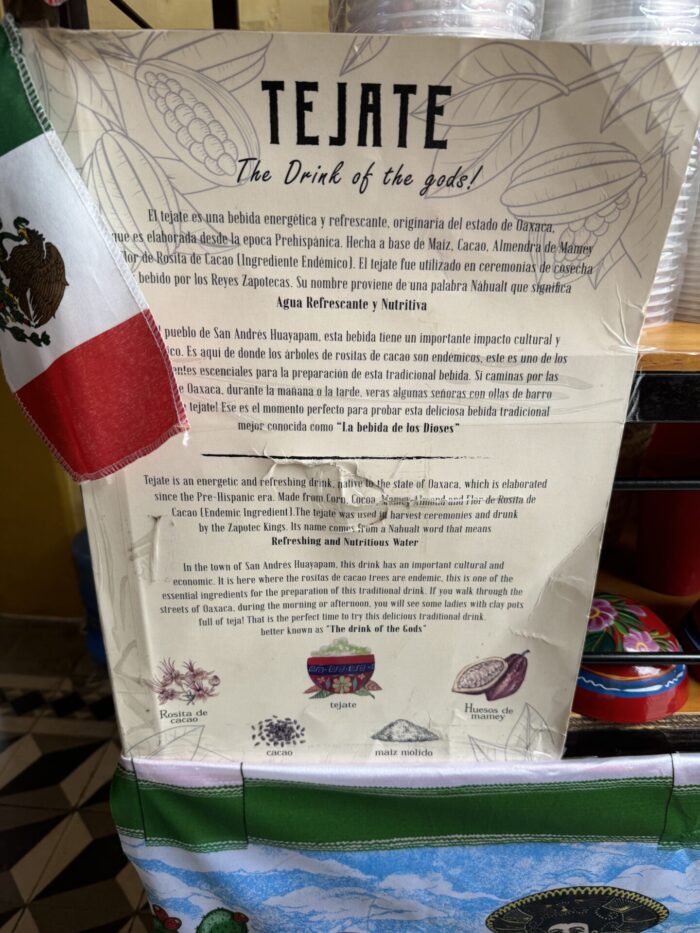
Today, the drink is traditionally made by women in San Andrés Huayapam, just outside of Oaxaca City. It’s here that the flor de cacao is most prevalent.
These tejateras produce the paste using closely-guarded recipes and methods passed down through the generations. Traditional tools such as the comal (a hot, round pan used for cooking and toasting) and the metate (a stone used for grinding) are integral to the process.
The paste is then mixed at stalls across the region and served cold as a refreshing drink.
Tejate is typically served in painted calabash gourd bowls, known as jícaras.
Legend has it that tejate was once consumed only by nobles or that it was gifted by the gods themselves, hence the nickname, “the drink of the gods,” though nobody really knows the origin for sure. It’s not a bad marketing slogan.
Foamy, rich tejate is full of vitamins, protein, and energy, making it popular before a long day at work.
Drinking Tejate in Oaxaca
La Cosecha Mercado Organico (Instagram) is a small marketplace with food and drink stalls in central Oaxaca. We first visited it as one of the stops on an excellent Culinary Backstreets Oaxacan food tour, then returned a couple of times.
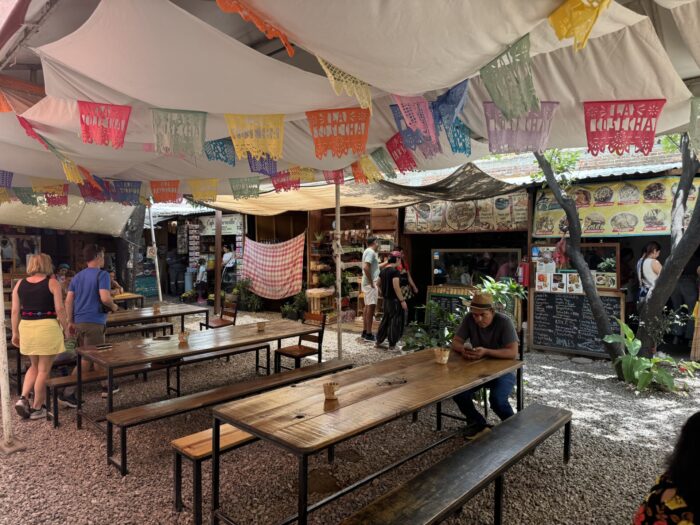
In addition to tejate, La Cosecha Mercado Organico also has vendors selling other local traditional drinks, including tepache, pulque, and pozontle. The market is smaller and quieter than other large markets such as Mercado Benito Juarez, so it’s a good place to try new food and drinks without being overwhelmed by crowds.
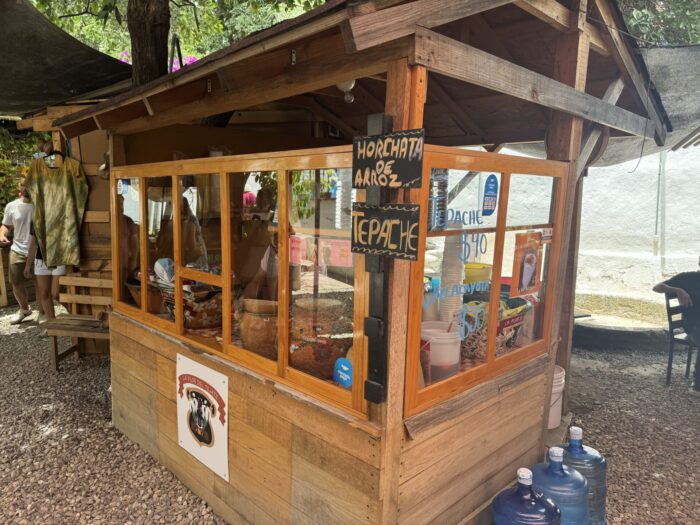
The cold tejate was very refreshing, especially on a warm day after we’d eaten plenty of great food.
The flavor has elements of chocolate milk and horchata, but the liquid is thinner and has more complex flavors.
The fatty foam on top (known as nata) comes mostly from the mamey and the flor de cacao. It’s fluffy, a bit like marshmallow in a way, but tejate is not overly sweet. It’s creamy without being intense.
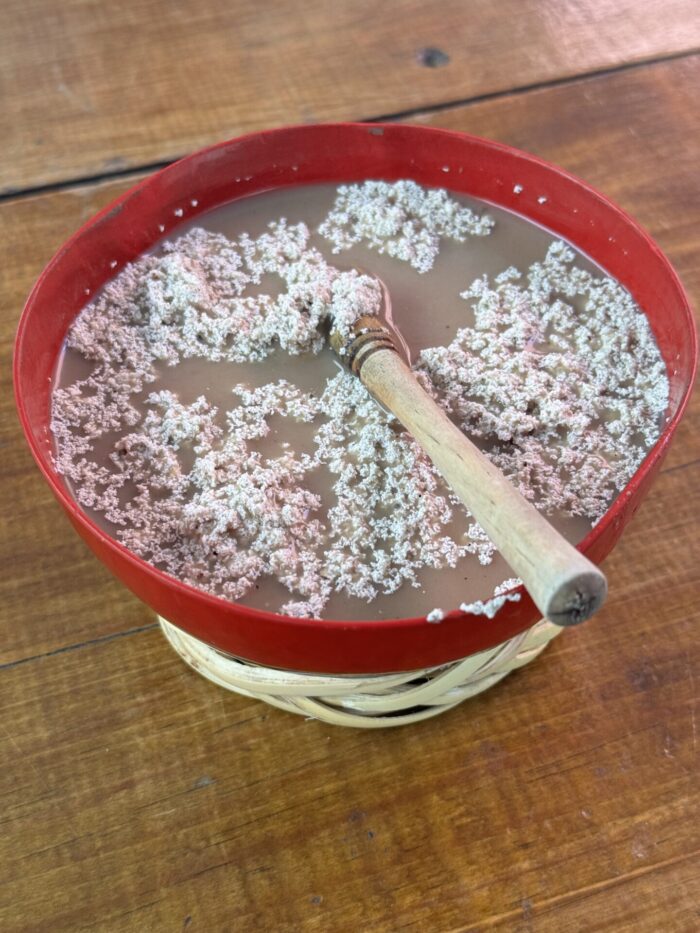
I really enjoy tejate. It’s delicious and refreshing, and something you won’t find anywhere else in the world outside of Oaxaca (at least not authentically!).
In a world where so many drinks have been lost to time due to multinational beverage conglomerates taking over consumer demand, it’s a treat to have something local that has endured for centuries.
