

I independently & honestly review all of my travel recommendations. If you click on links I provide, I may receive compensation
Beneath central London lies some unique history dating back over two thousand years. Back then, the Romans controlled the area, known as Londinium. They constructed a variety of buildings, including houses & baths, temples, and an amphitheater. Over the years, much of this architecture has been lost to time. However, there are still a few places in London where you can see Roman ruins. One of the most unique is the London Mithraeum, also known as the Temple of Mithras. I enjoyed visiting to tour these old ruins.
It’s easy to walk around the modern buildings of central London & pass right by the London Mithraeum. Thousands of people do it every day as they enter & exit Bank Station. But right inside the new Bloomberg building lie the foundations of an important part of Londinium’s Roman life, along with items excavated in the area.
The Temple of Mithras was a Mithraic temple dedicated to the god Mithras. Mithraists were rivals to early Christianity. The mystery cult was eventually eliminated from the Roman Empire, though the London Mithraeum is one of many sites in the former Roman Empire that can still be visited today.
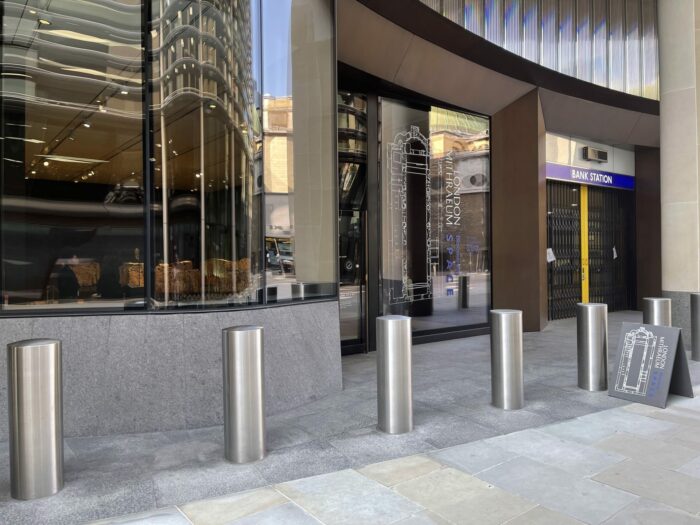
Access to the London Mithraeum is free, but we recommend booking in advance, as entry is timed.
The museum is open every day except on Mondays. You can book tickets on the official website here.
The website also has an app called “Bloomberg Connects” that provides deeper background on the museum & the exhibits within. It’s a effective way to integrate modern technology with this historic site.
Some places would have shunted off this valuable ground-floor London real estate and done the bare minimum to preserve the ruins, but Bloomberg has really leaned into it as an attraction.
The first part of the ground floor of the London Mithraeum features a contemporary art space with a rotating exhibition of works inspired by the site.
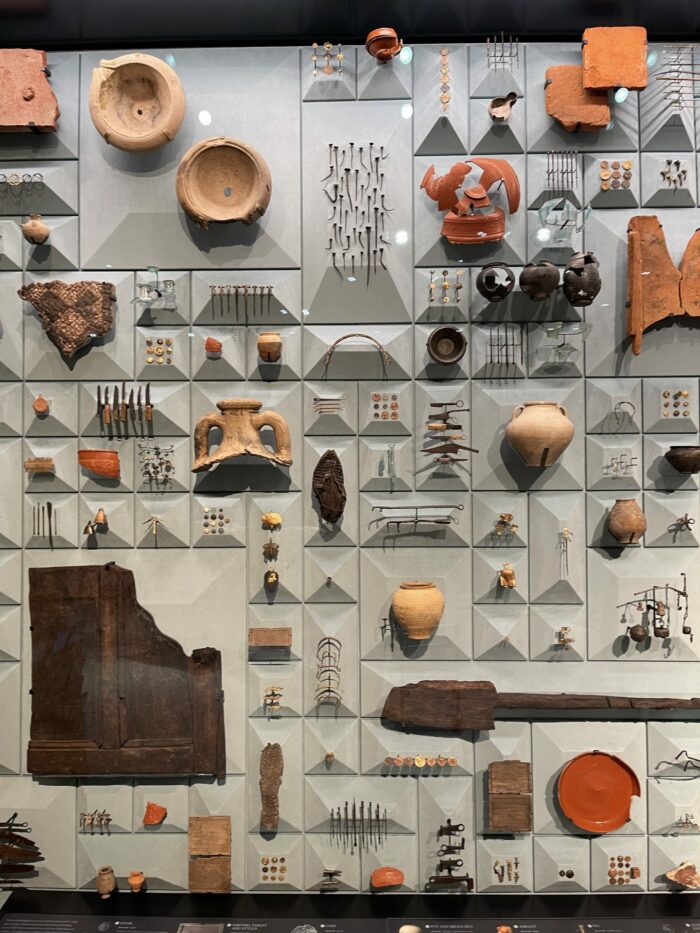
There is also a large, well-lit wall that illuminates some of the 14,000 Roman artifacts found during the excavation of the Temple of Mithras & the surrounding area, including coins, jewelry, leather shoes, and writing tablets. It’s remarkable how well-preserved many of these items are.
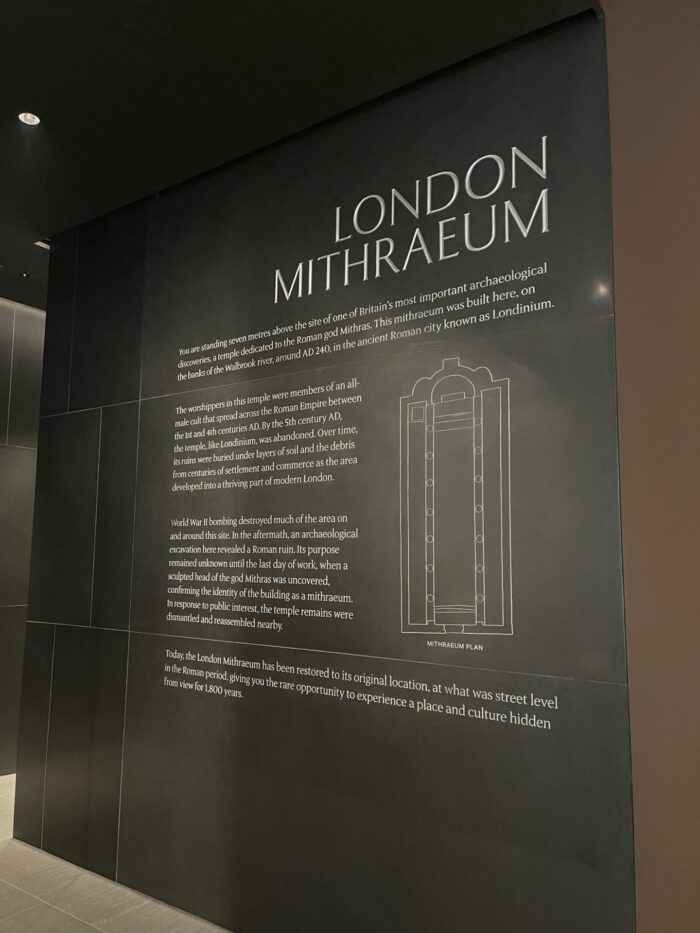
The next floor down contains an introduction to the site. There are details about its history and background, along with a recording. This area serves as a waiting room for the actual viewing of the Temple of Mithras.
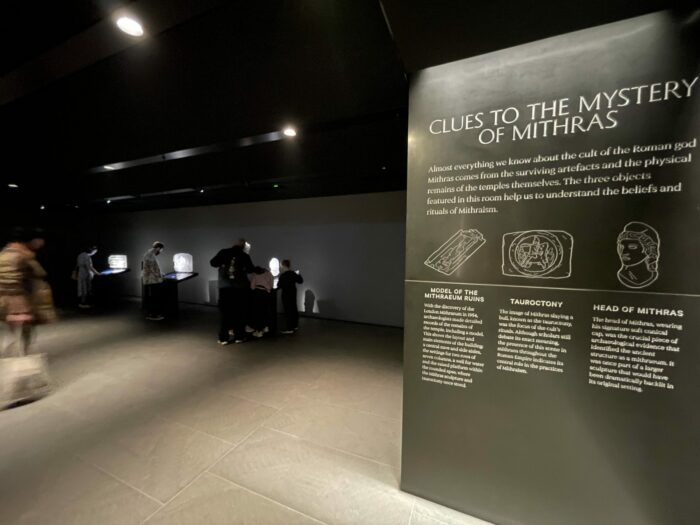
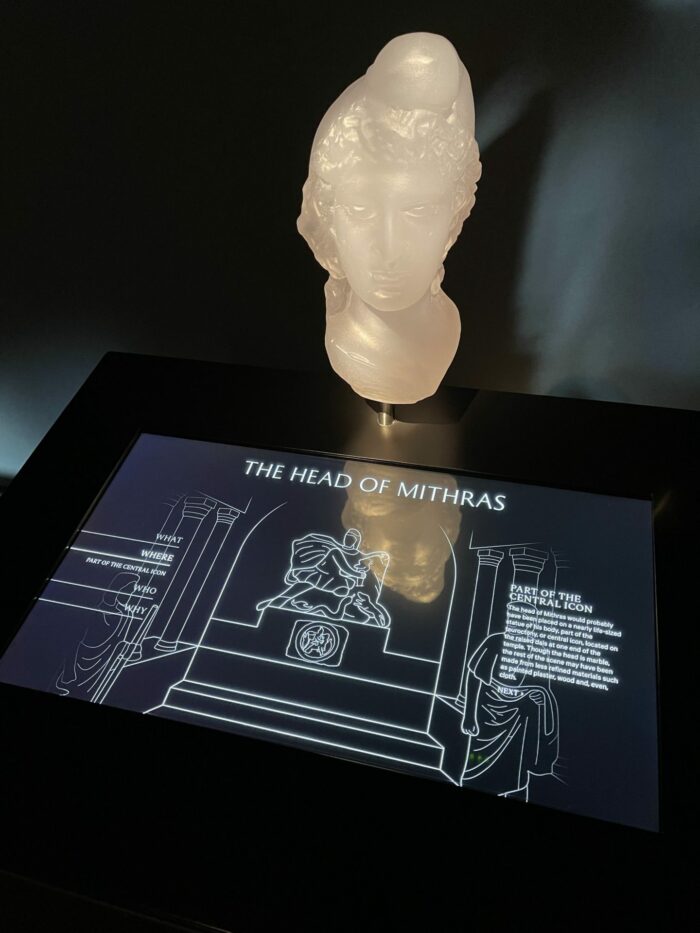
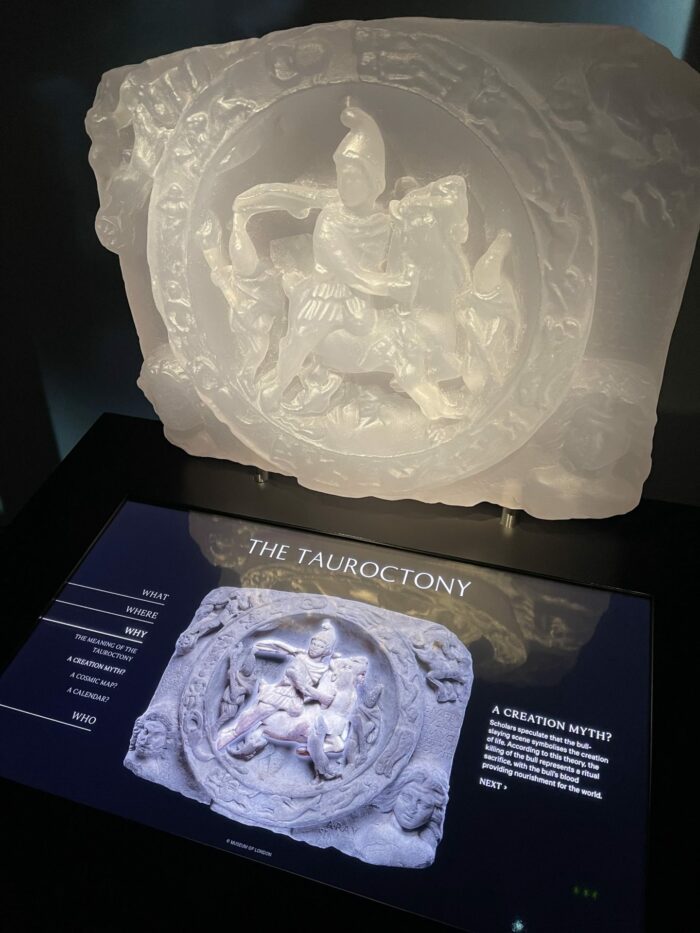
Though the museum doesn’t delve into the details, the Temple of Mithras has actually been moved around a couple of times. This excellent article outlines the process in greater detail.
The temple, which is estimated to have been built around the 3rd century, was first discovered in 1954 during the construction of Bucklersbury House.
Marble likenesses of Mithras and other deities were found on site in the 1950s, confirming the temple’s purpose.
To preserve the ruins, the main foundation was relocated approximately 100 meters to Temple Court. There, it was available for outdoor public viewing.
However, when it came time to demolish the Bucklersbury House & construct new buildings, there was an opportunity to restore the site. Bloomberg incorporated the London Mithraeum into the plans for its new European headquarters, bringing the temple back home (or as close as possible – some remaining ruins on the site were too fragile to be touched).
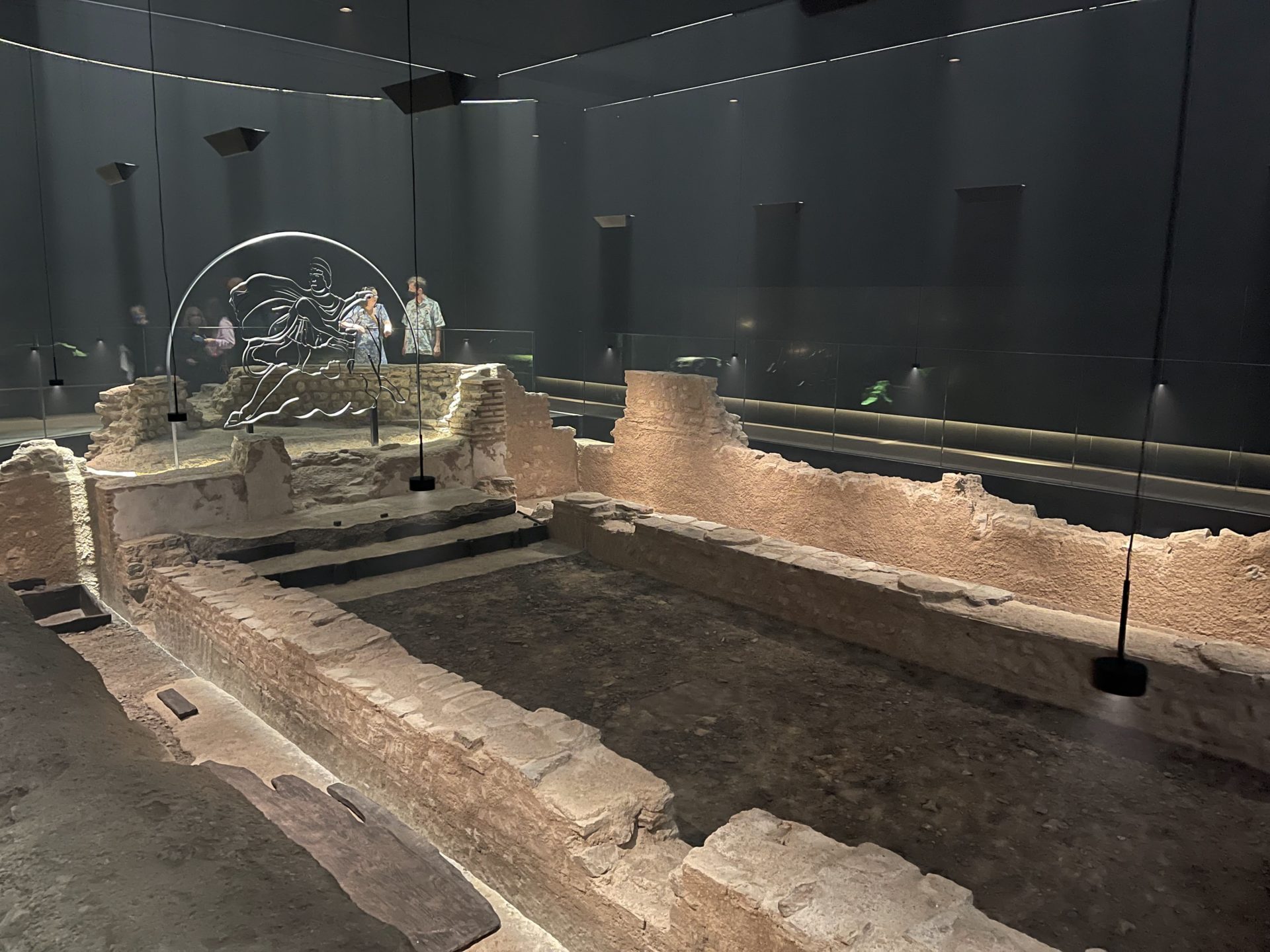
The ruins you see today are a reconstruction of how they were found during the original 1954 dig, with a modern twist.
Every 20 minutes or so, small groups are led into the dark room housing the temple. It’s an immersive experience that begins in darkness, then spotlights & a bit of fog illuminate the temple’s interior & exterior. It’s a fascinating way of bringing these ruins to life.
Oftentimes, with sites like these, you have to just imagine what the complete structure would have looked like thousands of years ago. It’s a novel way of presenting history.
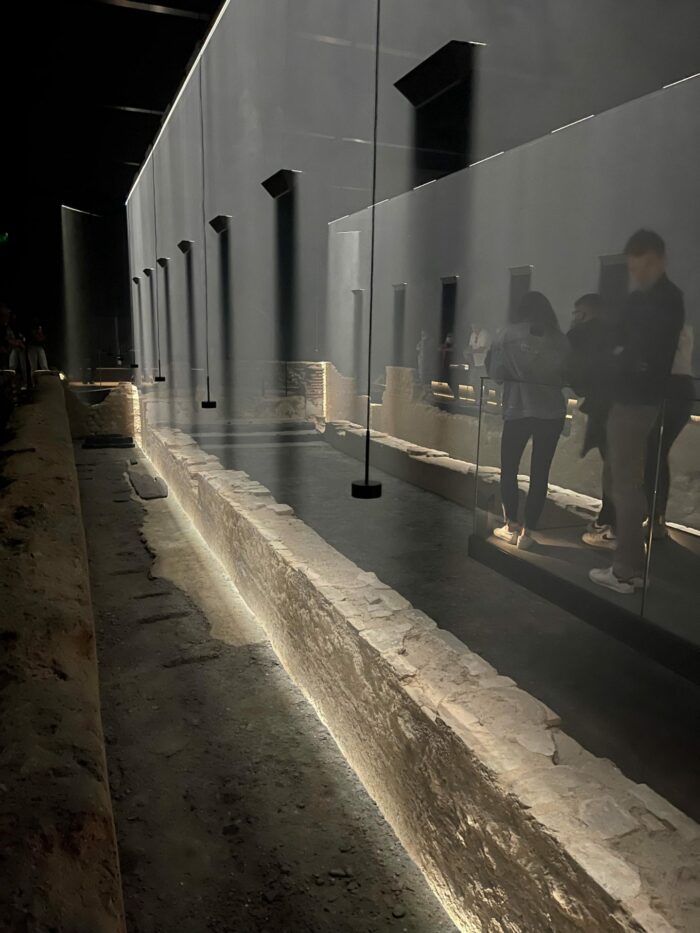
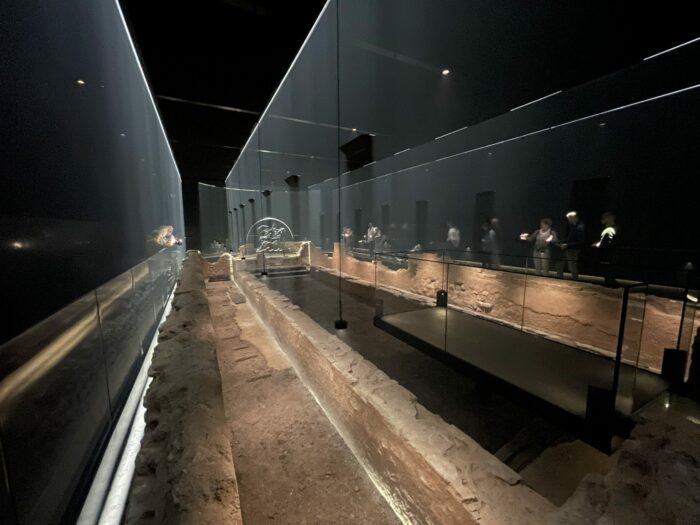
This show lasts approximately five minutes. You are then free to walk around the perimeter of the London Mithraeum ruins for the rest of your time.
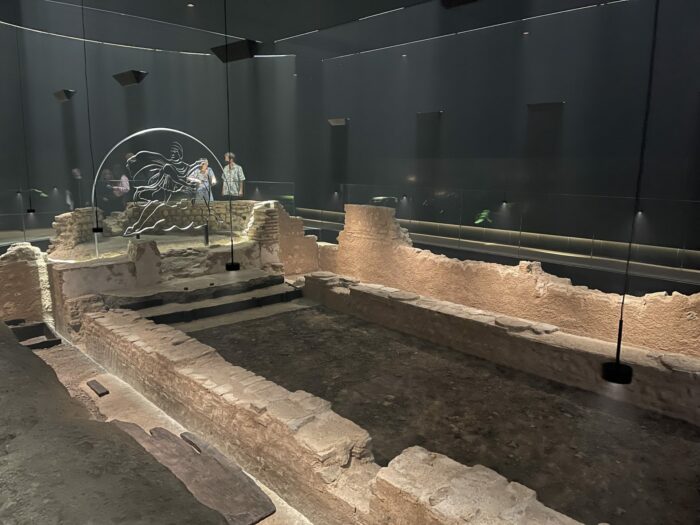
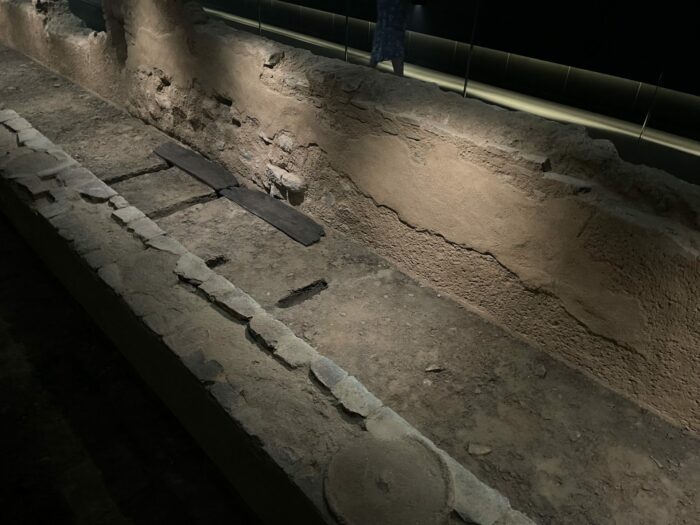
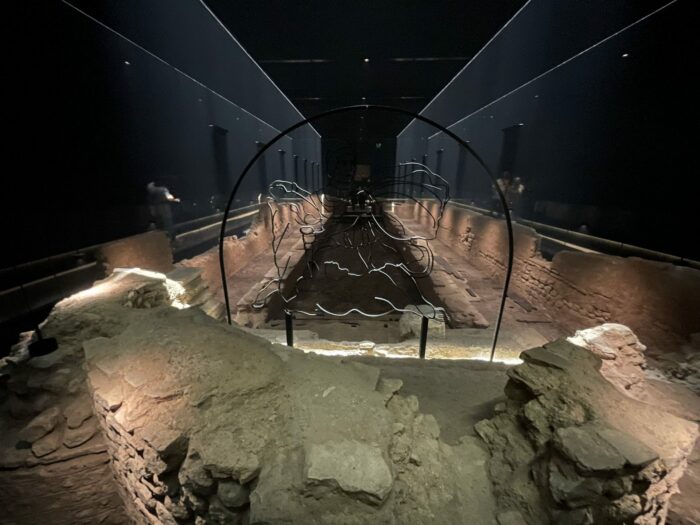
The London Mithraeum provides an interesting view of Roman London. A visit can be combined with other historic spots for an interesting afternoon of Roman architecture in London. Nearby, you can also visit the Roman amphitheater at Guildhall and the Billingsgate Roman House & Baths.
Here are some great London tours & activities & other things to see & do in London.
If you’re looking for a place to stay in London, check out these London hotels.
