

This article has partner links that I may receive compensation from at no cost to you. Thank you for supporting my site by using them!
Granada, Spain is filled with beautiful historic sites to visit. While La Alhambra is the focus for most visitors (and rightfully so), there are several other places also worth checking out. One such place is the Carthusian Monastery (Monasterio de la Cartuja).
Granada‘s Carthusian Monastery is famous for being one of the best examples of Spanish Baroque architecture. The monastery was established in 1506, but construction continued for some 300 years, allowing for an interesting evolution of the property & blending of architectural styles.
The Carthusian Monastery (full name: Monasterio de Nuestra Señora de la Asunción “La Cartuja”) is located in the northern part of Granada, not too far from the train station & near a Granada University campus. There are buses available to the area, but the walk is also pleasant. It is also along the hop-on, hop-off train, and part of some Granada city tours.
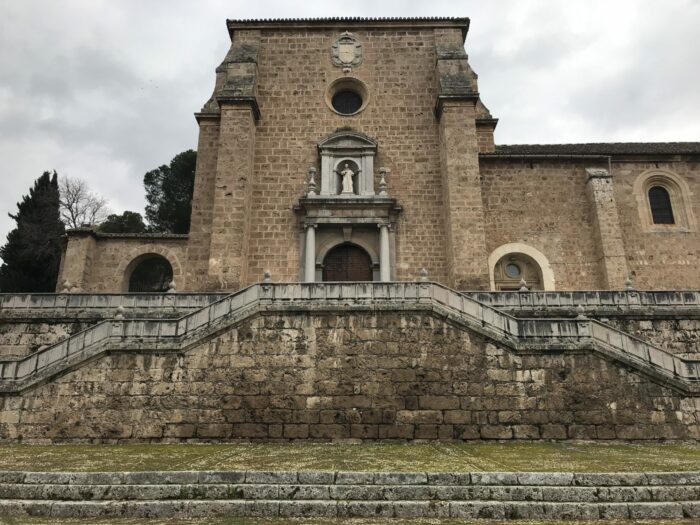
Entry to the Monasterio de la Cartuja is 5 euros (website), but that comes with a helpful audio guide that provides background information about the complex’s history and architecture. Admission is free on Thursdays. The cobblestones, staircases, and 18th-century neoclassical facade of the building set the scene for the architecture inside.
Just past the monastery entrance is the cloister. Although on the smaller side, it’s a beautiful space, filled with orange trees and other plants whose lushness contrasts against the buildings and the sky.
Book your hotel in Granada now!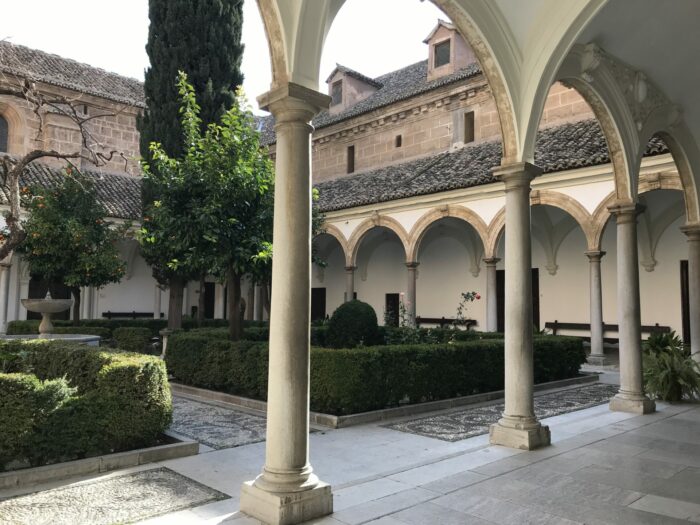
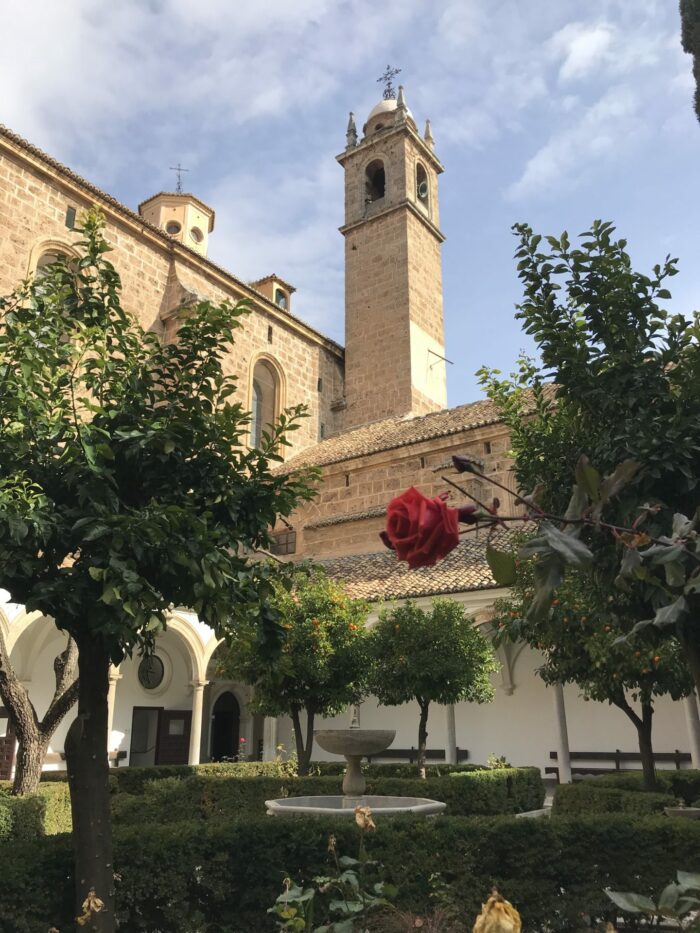
The first building of the tour is the refectory. This is one of the older portions of the monastery. The refectory is filled with paintings from Spanish Baroque artist Juan Sánchez Cotán.
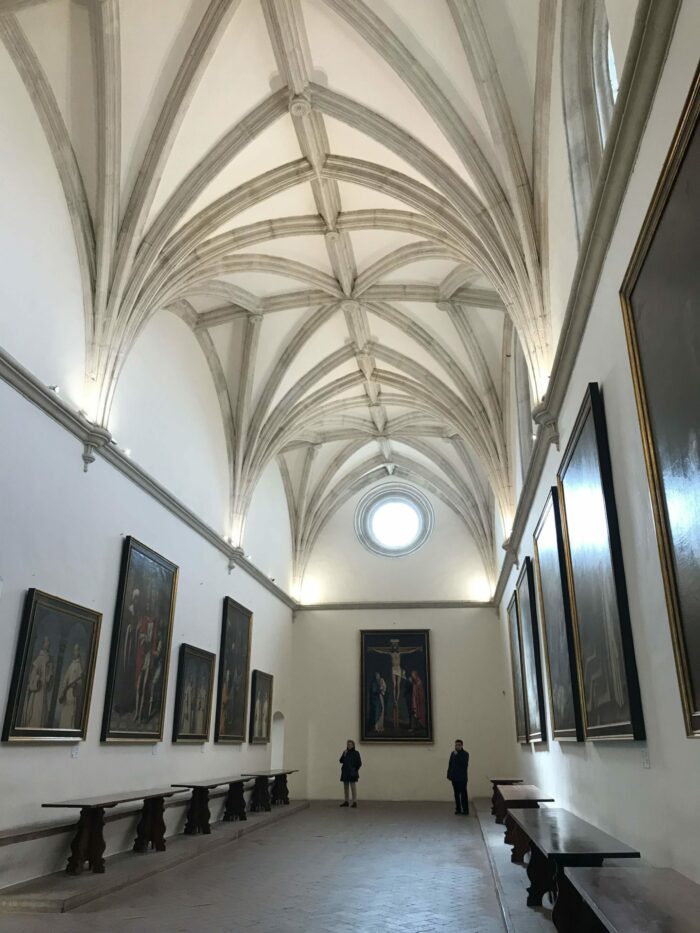
Next is the Chapel of Legos, which was built between 1517 and 1519. It’s remarkable that you can’t even see all of the little plastic bricks.
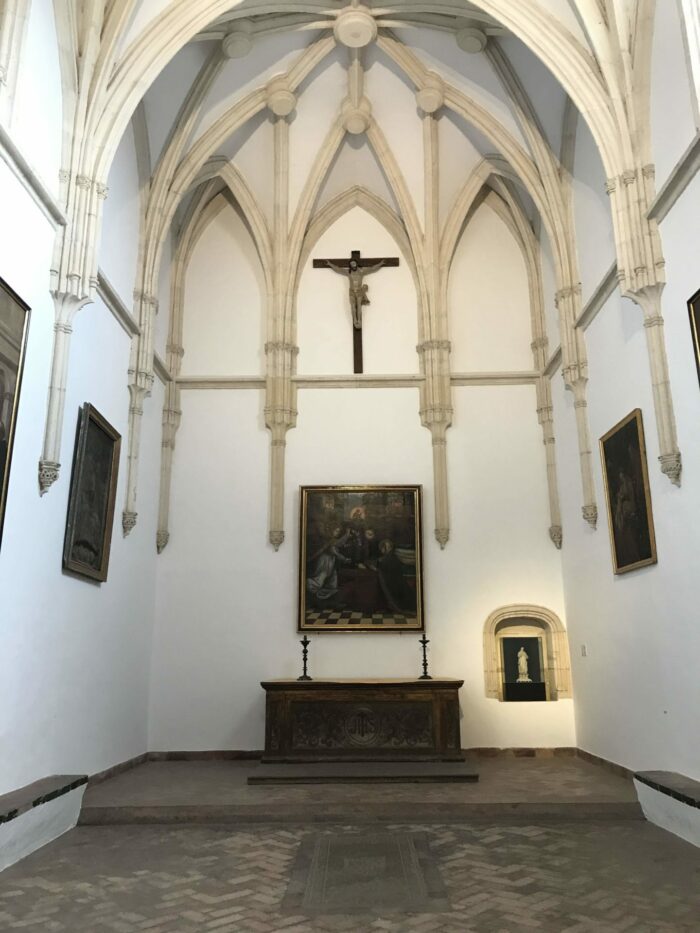
The progression of the Monastery tour then heads toward newer portions of the buildings, starting with the Chapter House. The Chapter House contains paintings from Vicente Carducho.
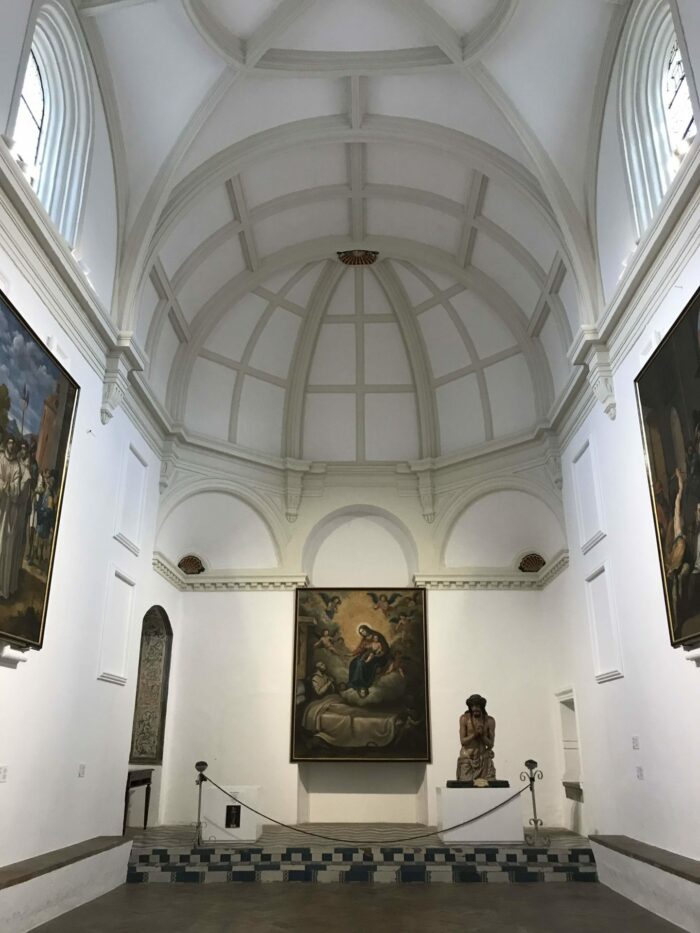
Then it was time to head into the grandest buildings of Monasterio de la Cartuja: the church & sacristy. These sections were built later, in the 16th and 17th centuries. Compared to the previous sections, the church has more decoration.
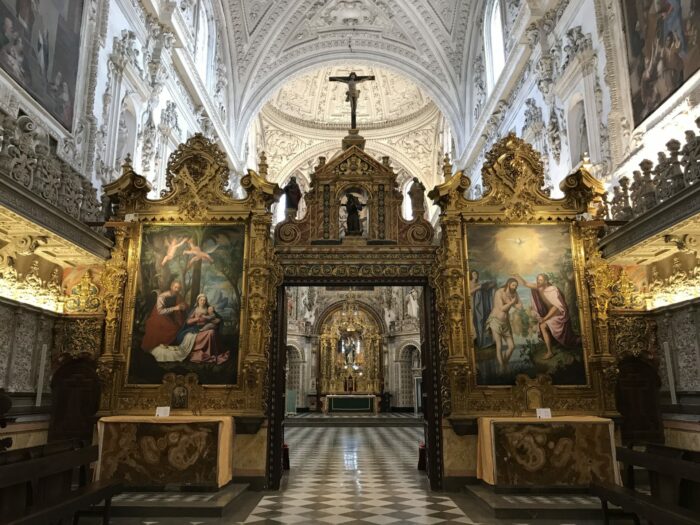
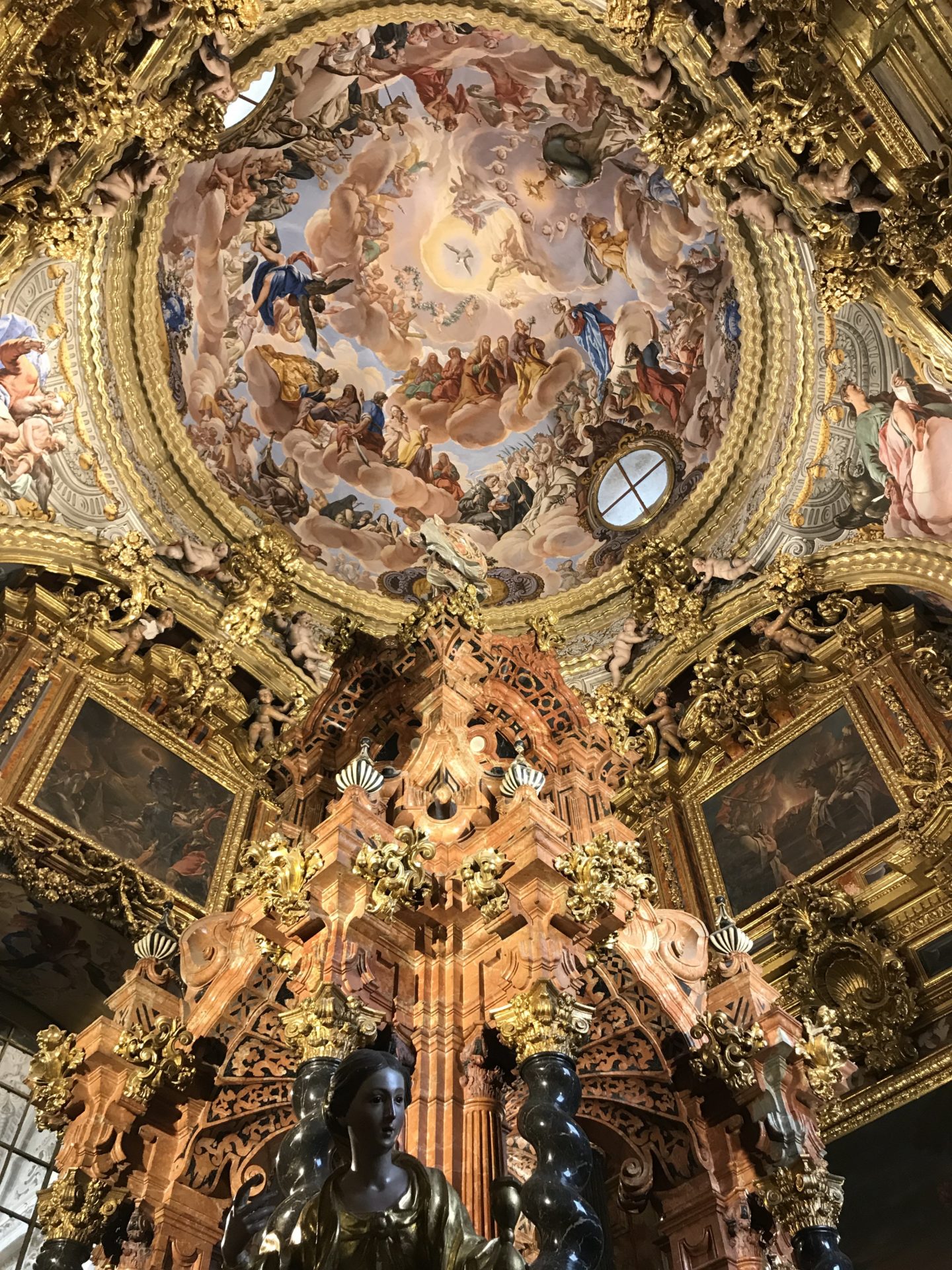
As if this church isn’t pretty enough, the tour then heads into the most spectacular portions of the Carthusian Monastery, the Sancta Sanctorum & tabernacle & the vestry.
The detail is remarkable. The Carthusian Order was known for its austerity. However, contrast this notion with the ornate decoration of the tabernacle & vestry in particular. Be sure to take some time to check out the many details, as it’s easy to be overwhelmed by how much is packed into these rooms.
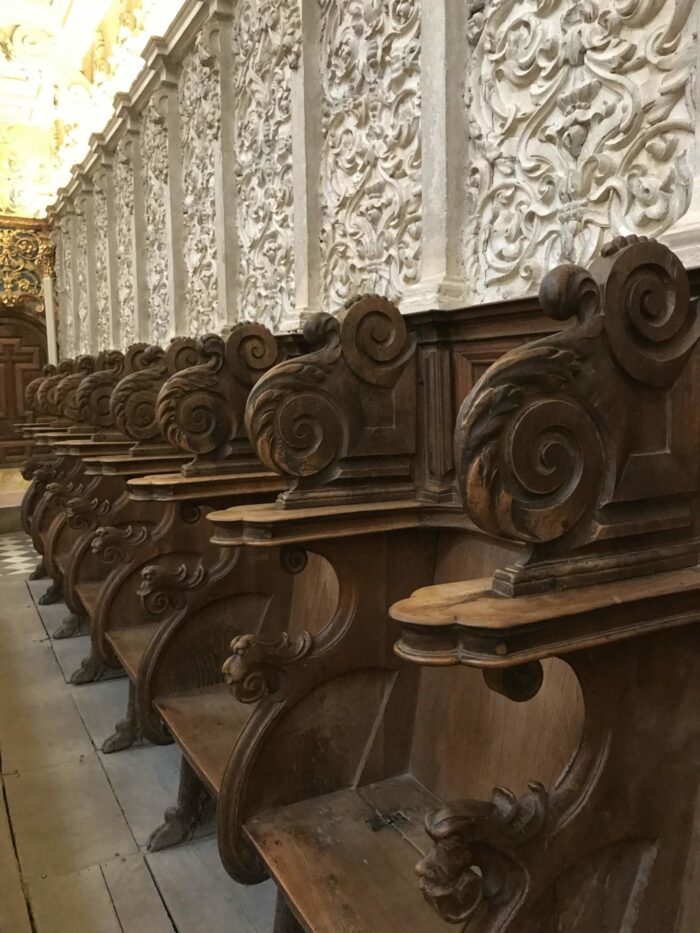
These sections are filled with beautiful marble & wood carvings, featuring dark colors and patterns. Particularly in the wood elements, you can pick up some elements of local woodworking & Arabic influence that you will have seen elsewhere in Granada.
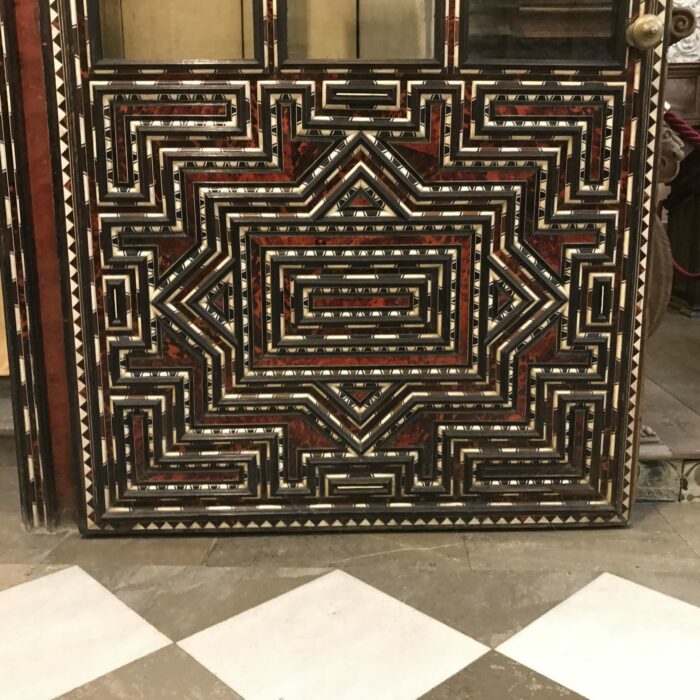
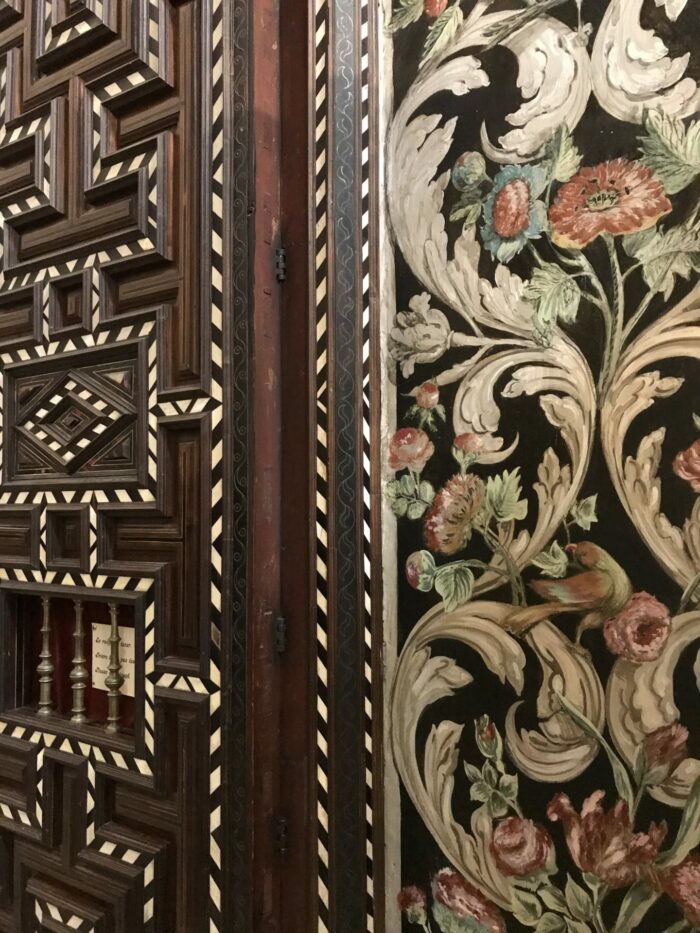
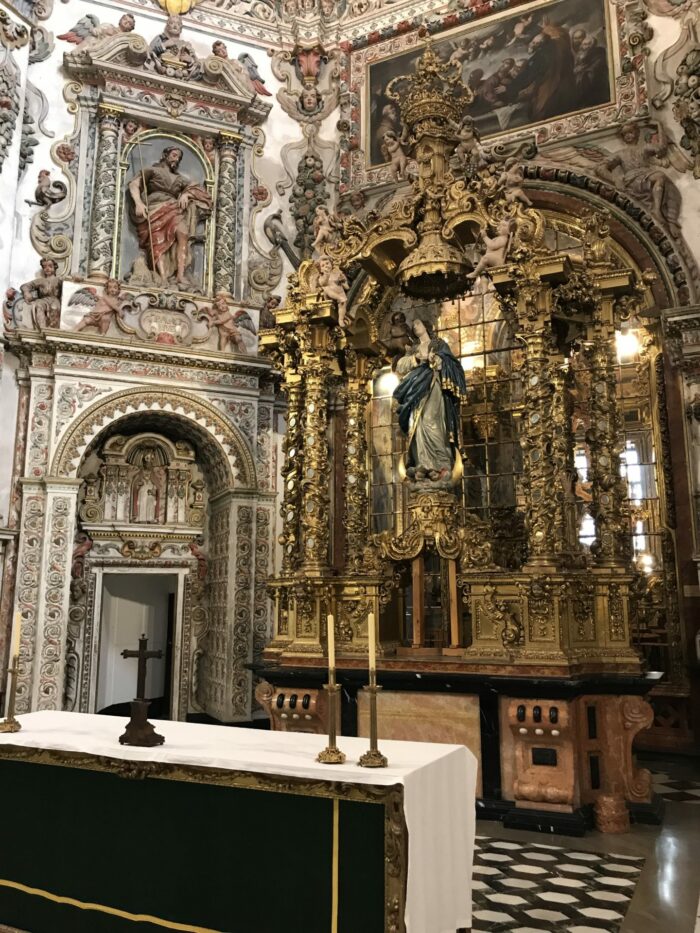
At the center of the Sancta Sanctorum is the tabernacle, with a stunning dome rising above it.
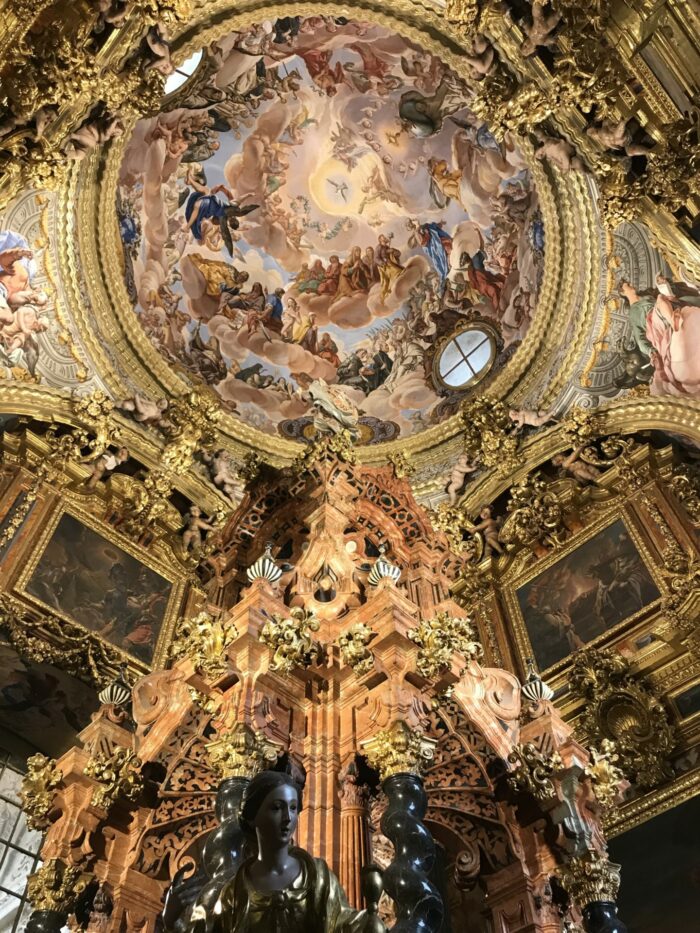
The visit concludes with the impressive sacristy, also referred to as the vestry. In this darker room, there are more gorgeous stucco decorations, with a tiled floor and another dome. The sacristy is particularly notable for its Spanish Late Baroque architecture. Construction on the sacristy began in 1727, but it was not completed until 1764.
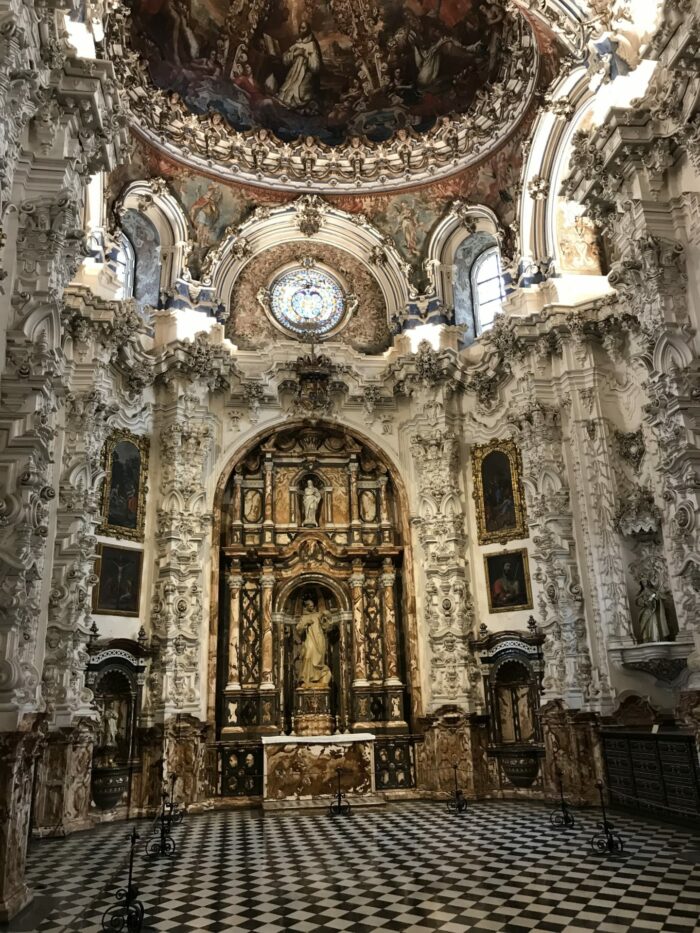
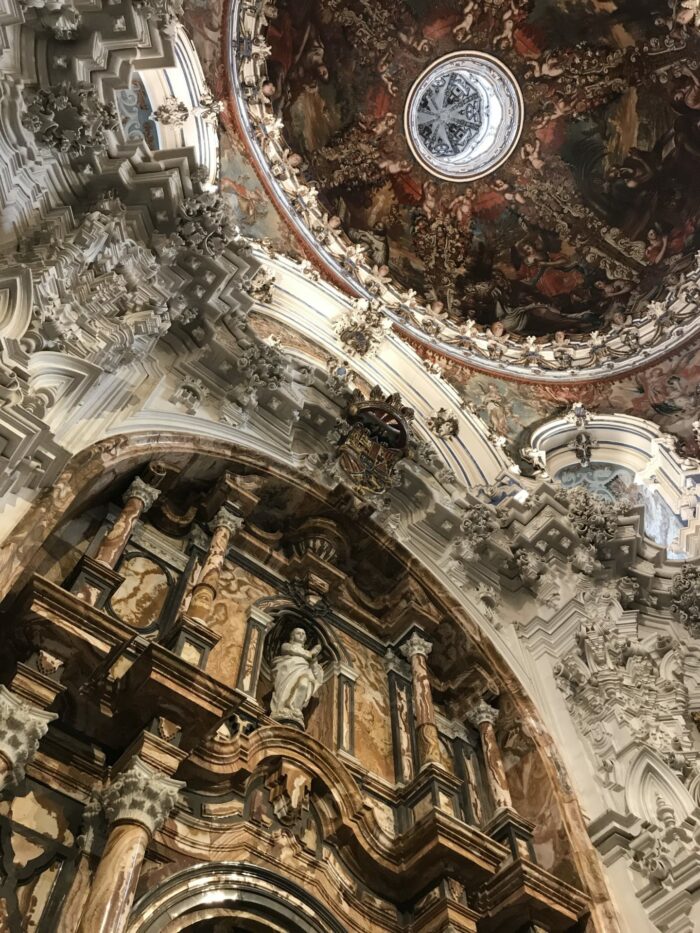
As beautiful as the Carthusian Monastery in Granada is today, this complex actually used to be much bigger. The monastery was confiscated in 1835, resulting in the destruction of much of the property a few years later. Today, only the entry area, church, and cloister still remain. Prior to the expulsion of the Carthusian Order, Carthusian monk cells & gardens, the priory house, and open land surrounded these buildings. The continued existence of this much of the Monasterio de la Cartuja is actually remarkable. Many similar monasteries of the Carthusian Order were completely destroyed.
While not a destination that many visitors get to, Granada’s Carthusian Monastery is another great example of the city’s beautiful architecture. The historic site is not crowded at all compared to most other spots & is worth the detour.
For more history, architecture, & views, you can also visit the San Geronimo Monastery, the Dobla de Oro, and Granada’s beautiful miradores.
Here are some great Granada tours & activities & other things to see & do in Granada.
If you’re looking for a place to stay in Granada, check out these Granada hotels.

The Carthusian Monastery is so beautiful that it must appear in the list of the top religious buildings in the world. Taking a tour of this monastery would be soothing to the mind and heart.